Timespinning is an ancestral laboratory for broken traditions. It is a guided listening and wayfinding practice that uses harp, Romani philosophy and a mobile app to help you decolonize time, memory and destiny, and it grew out of my choreonavigation research and a question I have never been able to put down: how do we move through history without being trapped by it?
For Roma, the past is not fixed and the future is not separate from the present. Time is layered, relational and carried in song, story and body. Each journey combines live harp improvisation, spoken reflection and interactive prompts to make a personal map of memory, intuition and future. It is not fortune-telling. It is a structured act of imagination in conversation with tradition: an old way of listening to where you have been, where you are, and what wants to come next.
Circle, carry, return.
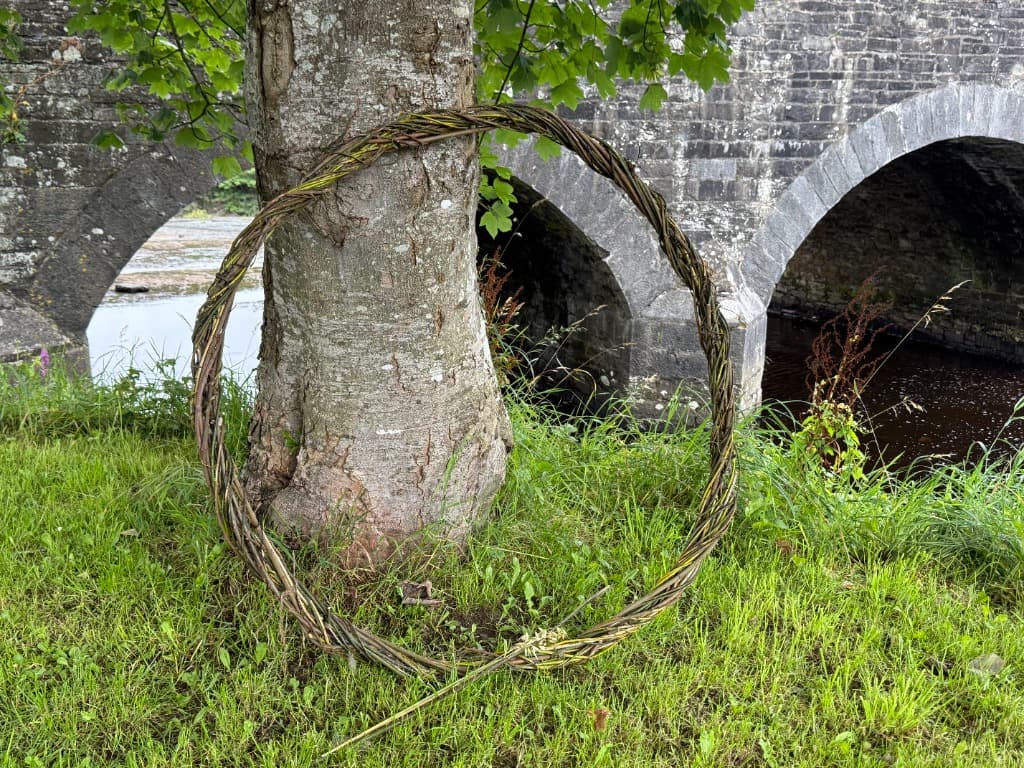
The harp has long been associated with thresholds, liminality and memory across Romani, Celtic and Mediterranean traditions. Its overtones create a sonic field where the listener can locate themselves differently. Timespinning takes what the research taught me about embodied wayfinding and brings it down to a personal, daily scale, where movement, attention and place become the tools for orienting through uncertainty.
It is for anyone navigating grief, transition, creative block or the quiet longing to be in deeper contact with their own lineage and future. It does not require you to know your ancestry or believe in a fixed outcome. It only asks you to listen and respond.
The journeys live on the Gypsy Fires newsletter, where subscribers receive guided audio, written scores and invitations to live sessions, and where new journeys are released first. A companion mobile app is on its way.